The Road to High-Mach
The core physics of high-Mach flight have been understood for decades. But rapidly designing, building, testing, and operationalizing high-Mach aircraft is a beautiful, brutalist artform that has not been practiced in earnest in some time. It’s also one that Hermeus is resurrecting: Design it. Build it. Fly it. Find what breaks. Build the next one better.
In the rapid progression from P-80 to F-104 to U-2 to A-12, Kelly Johnson touted the importance of “one miracle per program” – making one grand technological leap per iteration in order to stay fast and focused while still biting off marked incremental improvement. Hermeus has taken the same approach in successive demonstrator prototype programs, each with key technical enablers.
Rather than trying to create a fully operational high-Mach aircraft in one step, we’re building a series of increasingly capable aircraft. Each aircraft is purpose-built to solve a defined set engineering problems, validate critical systems, and reduce technical risk for the next one we build.
A new era of speed is upon us, and Hermeus is bringing to life the platforms that will win this day and the next.
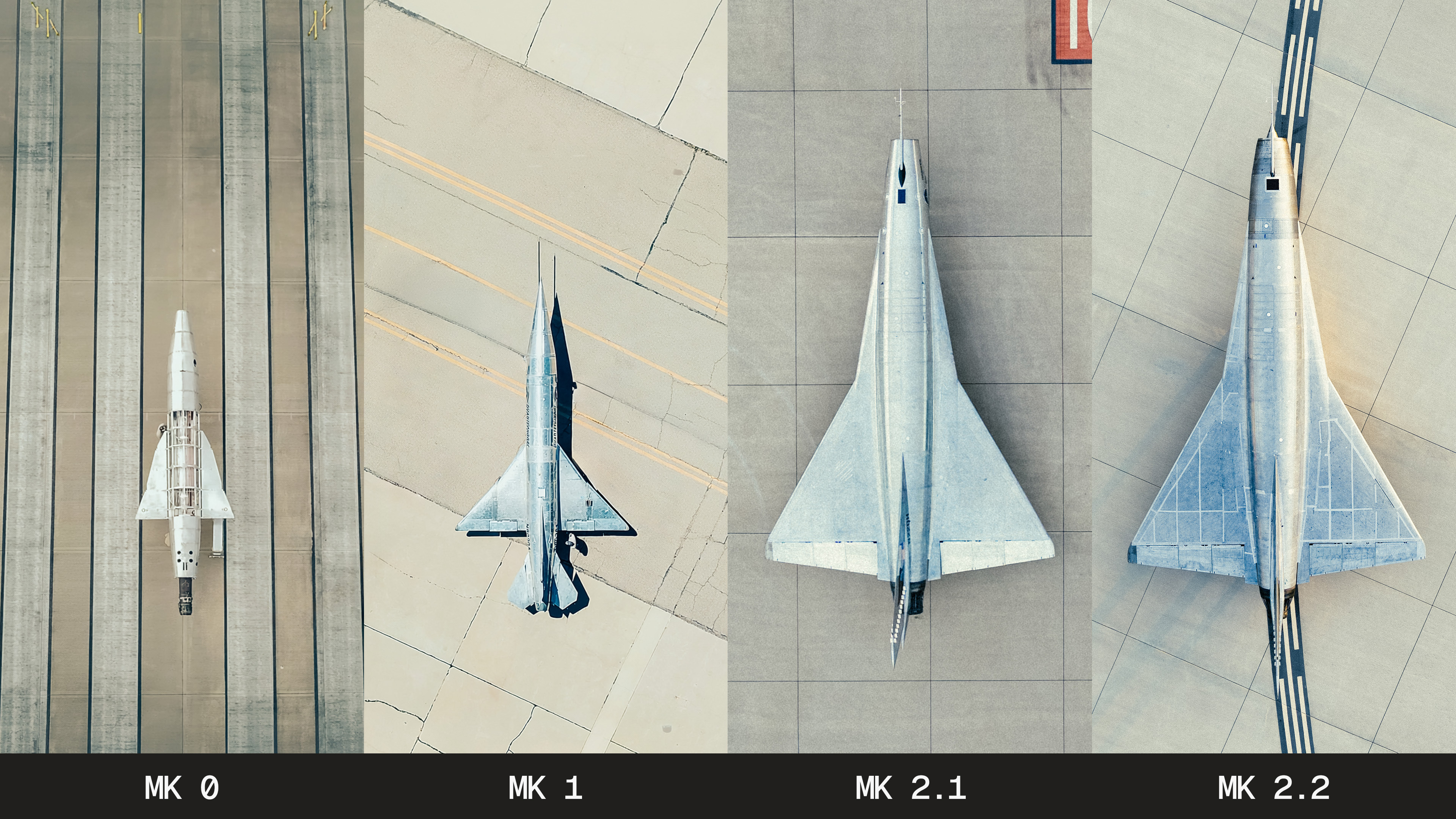
Quarterhorse Mk 0: Build a System of Systems

Built as a taxi-only vehicle around a General Electric J-85 jet engine, Mk 0 served as the pathfinder for our in-house manufacturing, integration, and test processes.
The lessons learned from Mk 0’s airframe design, engine control, test operations, and wireless communication ConOp directly informed the development of Mk 1 and Mk 2, helping the team identify and address challenges before taking to the air.
Mk 0 underwent a 37-day deployed test campaign, completing taxi testing in November 2023.
Quarterhorse Mk 1: Fly an Unmanned Airplane
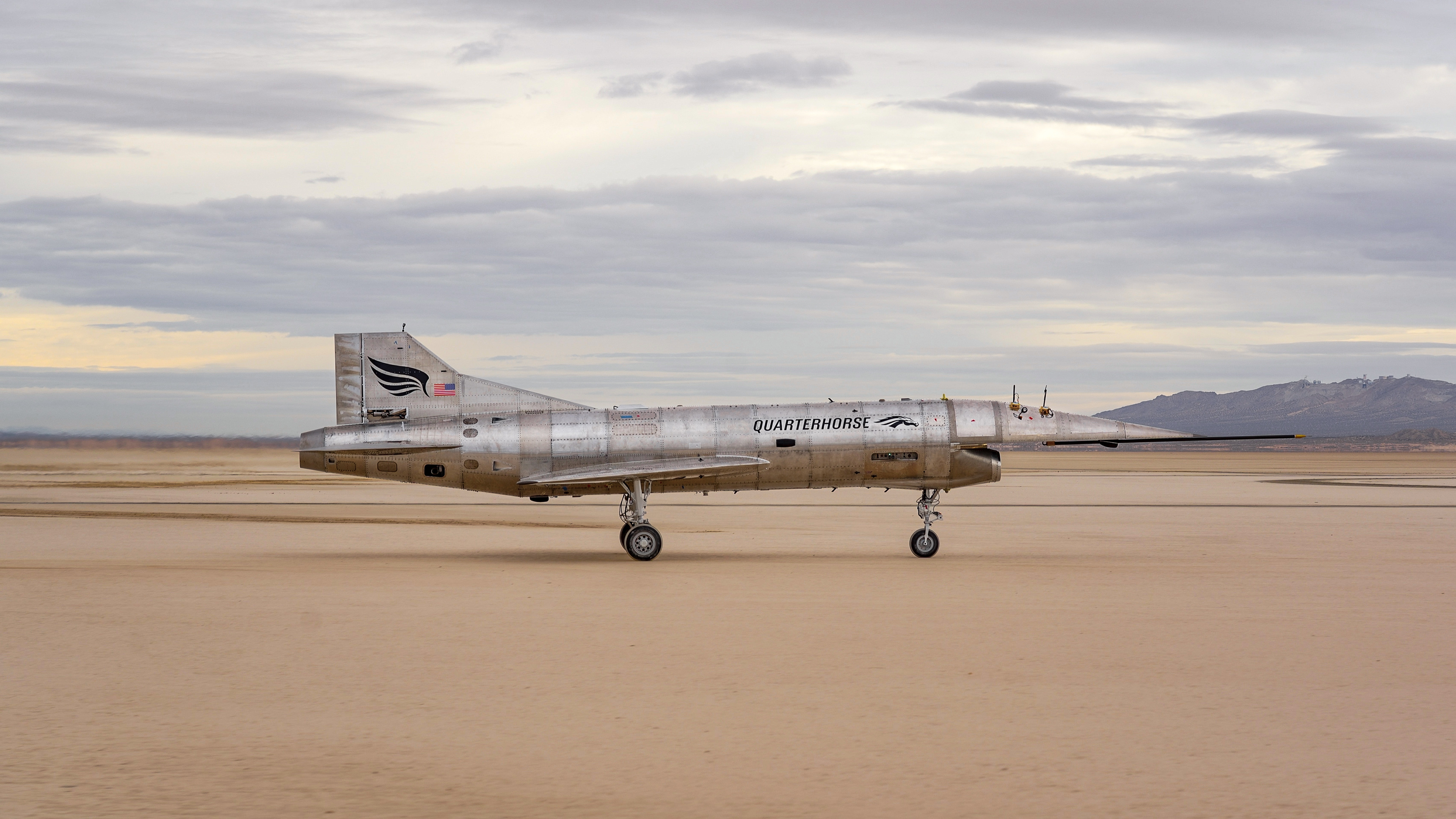
Our next vehicle, Mk 1, took the next step, delivering Hermeus’ maiden flight in May 2025 at Edwards Air Force Base. Powered by a GE J85 turbojet engine and built with a delta-wing configuration, Mk 1 allowed the team to mature the ground and flight controls during takeoff and landing, giving them the confidence to continue pushing forward.
Flight on hallowed ground signaled the ability of the company to deliver an aircraft on a rapid timeline unseen since the 1960s. By the time of flight, a far more capable vehicle was well underway in the Hermeus factory.
Quarterhorse Mk 2.1: Break the Sound Barrier
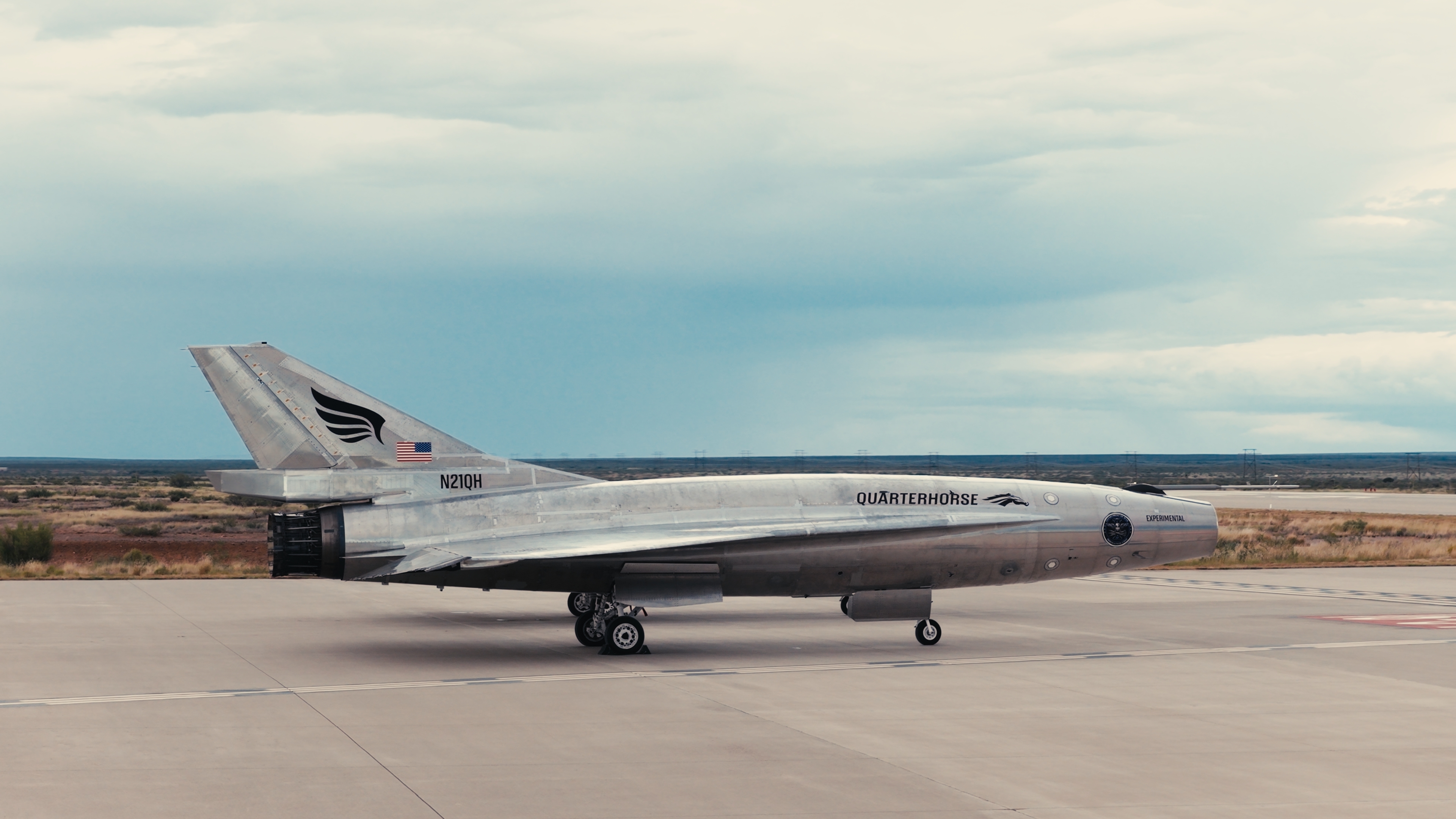
Roughly the size of an F-16, sporting the same landing gear as an F-16, and powered by a Pratt & Whitney F100 engine, Mk 2.1 is the first of three planned aircraft in the Mk 2 family.
From its first mission in February 2026 to its first supersonic sprint in May 2026, it took Mk 2.1 less than 1 hour of flight time to fly Mach 1.21 — a milestone achieved exactly 364 days after Hermeus’ maiden flight.
Mk 2.1 continued to expand the flight envelope for to Mach 1.6 on just its fourth flight and with less than 90 minutes of total flight time logged. It then went on to successfully deploy a demonstration payload on its following flight two weeks later.
Beyond reaching (and surpassing) supersonic speeds, Mk 2.1 demonstrated the team's ability to execute major milestones with new airframes on compressed timelines, proving out broad robustness for the OML and system in the way of stability, wireless communication robustness, autonomy software, payload deployment capability, and much more.
Quarterhorse Mk 2.2: Push the Propulsion
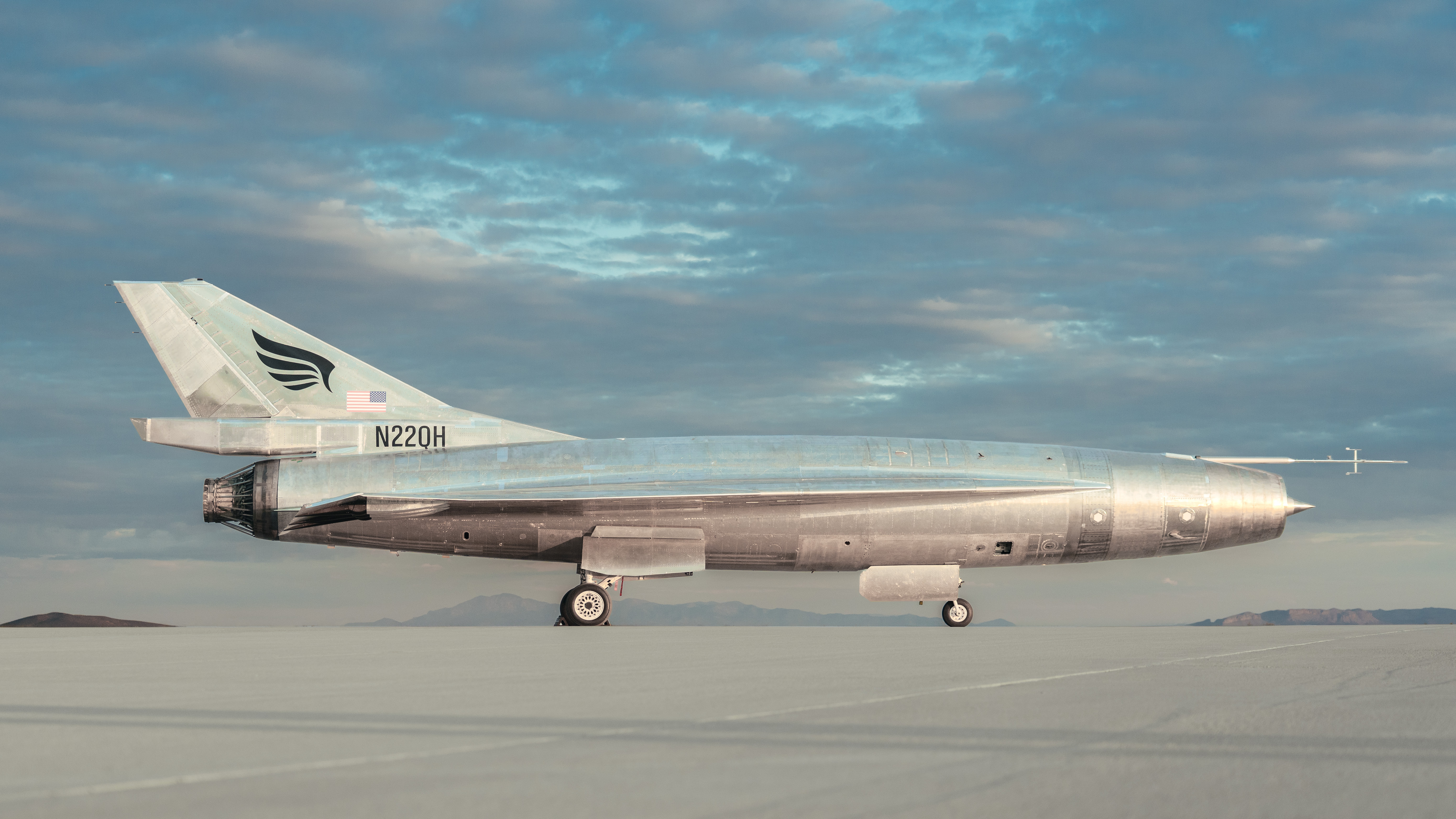
After only eight months of build time, Mk 2.2 kicked off its flight campaign in September 2026.
Mk 2.2 carries drastically upgraded avionics and software, additional fuel capacity, along with one key update: the Gryphon propulsion system.
As speeds increase to Mach 2 and beyond, managing airflow to our engine becomes one of the defining engineering challenges. Gryphon (seen as the “nose job”), comprises an actuated spike inlet and an engine that enables higher-Mach flight via conditioned air and shock structure before it reaches the engine, allowing efficient operation across a range of speeds that a turbine alone can’t do.
With Mk 2.2 now airborne, the goal is to use this campaign to validate the propulsion architecture that takes Quarterhorse beyond Mach 2 and sets up everything that comes next.
Quarterhorse Mk 2.3: Reach Ramjet Speeds
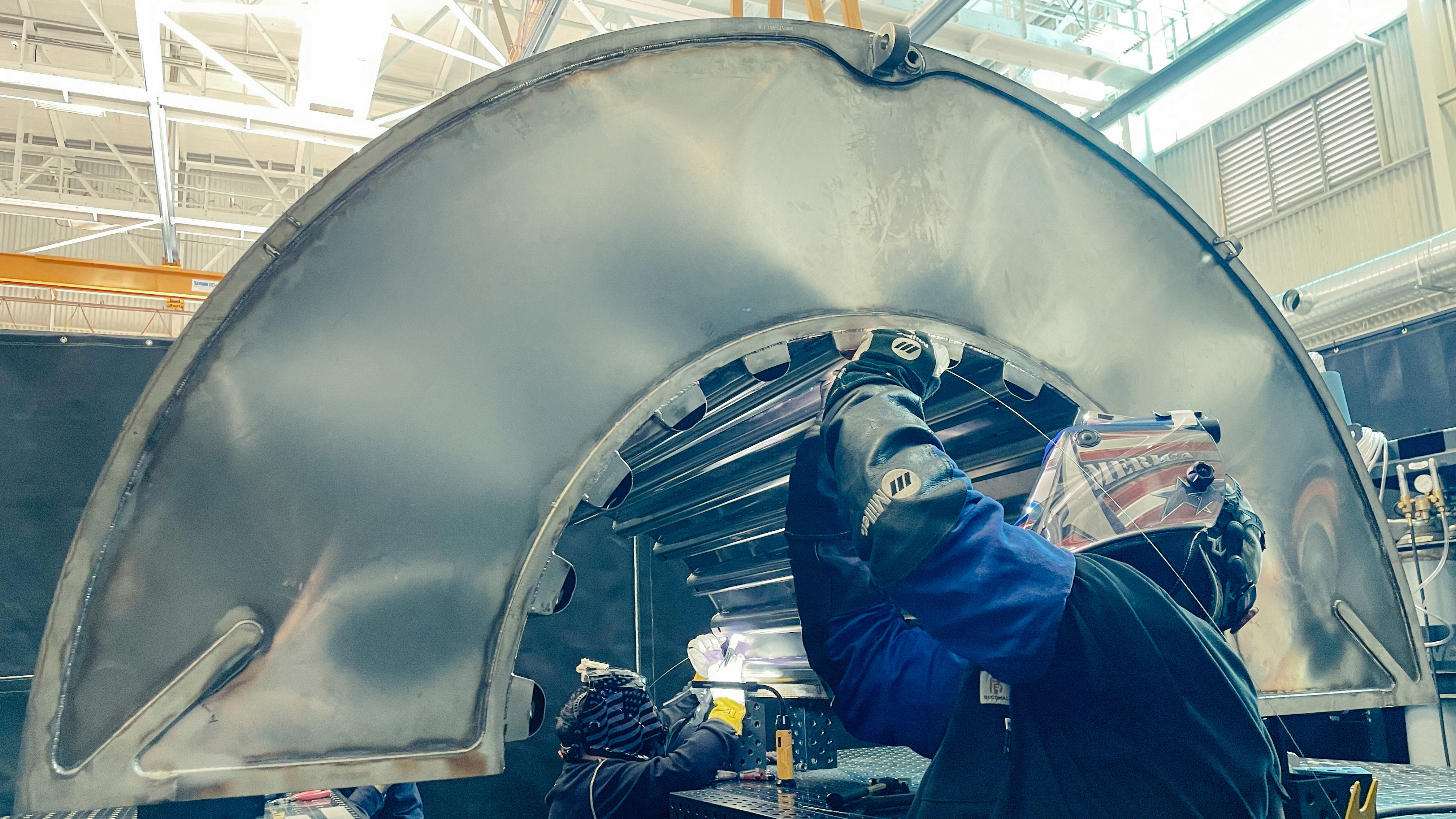
If Mk 2.2 is about propulsion, Mk 2.3 is about thermal management as we push towards a new airspeed record. The aluminum airframe used on earlier aircraft reaches its practical limits, requiring new concepts, materials, and thermal management strategies.
Mk 2.3 will continue to expand the flight envelope while collecting data on stability and control, inlet and pre-cooler characterization, and integrated climb performance as this aircraft flies faster and higher than its predecessors.
The objective for Mk 2.3 isn’t just to approach Mach 3. We also want to validate an airframe architecture and manufacturing approach that can scale to low-cost, high-rate production and create a credible path for operational use of our aircraft.
Mk 3, Mk 4, and Beyond
The Quarterhorse prototype lineage will soon grow beyond the Mk 2 family, pushing past the bounds of Mach 3 by way of Hermeus’ ground-demonstrated Chimera ramjet transition technology. Beyond Mach 3, the roadmap shifts from flying faster to changing how the propulsion system works in order to tackle sustained high-Mach flight and survive the extreme thermal environment near Mach 3.
Built around an all-new high-temperature airframe, Mk 3 will be the first aircraft powered by our Chimera II turbine-based combined-cycle (TBCC) propulsion system. Mk 3 will accelerate to Mach 3 speeds using turbine propulsion technologies, before demonstrating turbine-to-ramjet mode transition in flight. That transition is a feat that requires precise coordination of inlet, bypass, and engine systems, and one that can only be truly validated with flight testing.
When it flies, Mk 3 will become the first aircraft to use a TBCC propulsion system in flight and the fastest runway-launched jet in history.
With mode transition unlocked, our Mk 4 family of aircraft will aim to fly at ramjet speeds for long durations and at higher altitudes. Sustained flight at these speeds demands yet another leap in propulsion, structures, and thermal management, requiring upgrades across the aircraft to withstand sustained high-temperature conditions.
Mk 4 is where the roadmap comes full circle. We're applying the validated architecture to sustained ramjet flight and building the foundation for the world's fastest operational aircraft.
Between supersonic and high-Mach flight, there will be thousands of difficult engineering decisions, design trades, test points, and failures. Hardware will break, assumptions will be wrong, and new constraints will emerge. That’s the nature of trying to build aircraft that can reach speeds that few have successfully flown.
The work is difficult, fast-paced, and deeply technical. It’s also one of the few places in aerospace where you can build and fly fast planes faster than anyone thought was possible.
If this speaks to you, join us.
About Hermeus
Hermeus is reclaiming the lost art of rapid prototyping to build the fastest aircraft in history. By prioritizing relentless hardware iteration over traditional risk-averse development cycles, we deliver high-speed systems at the pace of the modern battlefield. Working with the Department of War, we provide the high-speed capabilities our nation and its allies need to maintain a durable, asymmetric advantage. Quarterhorse is a registered trademark of Hermeus Corporation.